Types of Air Conditioners: Choosing a System
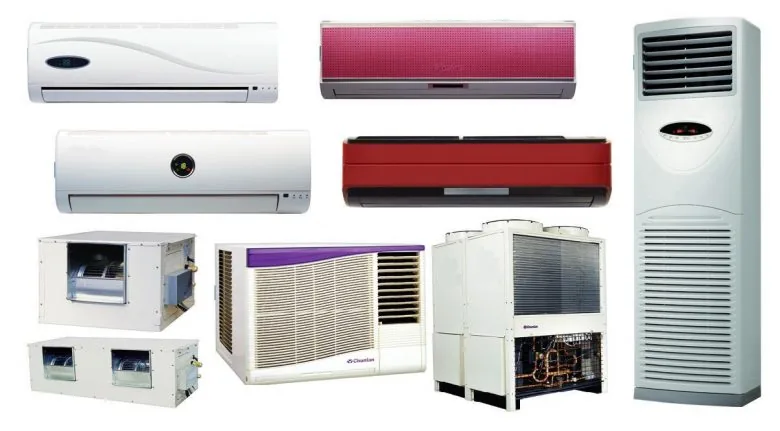
The main air-conditioning choices are room units, central ducted systems and ductless mini-splits. Heat pumps can also cool a home. Choose first by the space you need to cool and the installation the building can support.
Compare the main layouts
| Type | Typical use | Check before buying |
|---|---|---|
| Window or through-wall | A room or small defined area | Opening, support, electrical requirements and building permission |
| Portable | A room needing a movable indoor unit | Outdoor exhaust route, floor space and condensate handling |
| Central ducted | Several rooms served through ducts | Duct condition, airflow and whole-home sizing |
| Ductless mini-split | Individual zones without distribution ducts | Indoor placement, outdoor unit, line routing and drainage |
The Department of Energy's home-cooling guide compares room, central and ductless systems. Portable equipment still needs to reject heat outdoors; moving the cabinet does not remove that requirement.
Where heat pumps and geothermal fit
An air-source heat pump can reverse operation to provide heating as well as cooling. It may use ducts or ductless indoor units. Ground-source systems exchange heat with the ground through a loop. A hybrid or dual-fuel arrangement usually combines a heat pump with another heat source; it is not a separate room-AC form factor. See the DOE heat-pump system guide.
Make a useful shortlist
- List the rooms to condition and whether heating is also required.
- Identify restrictions on windows, exterior equipment and electrical changes.
- For a room unit, follow its sizing guidance; for a permanent system, request a load calculation.
- Compare noise, drainage, maintenance access and the complete installation scope.
Do not use equipment-only price ranges as an installed budget. Ask for itemized quotes so that opening work, ducts, controls and electrical changes are visible. For further detail, see HVAC sizing, ductless air conditioners and portable air conditioners.