HVAC Vacuum Pumps: How They Work and How to Choose One
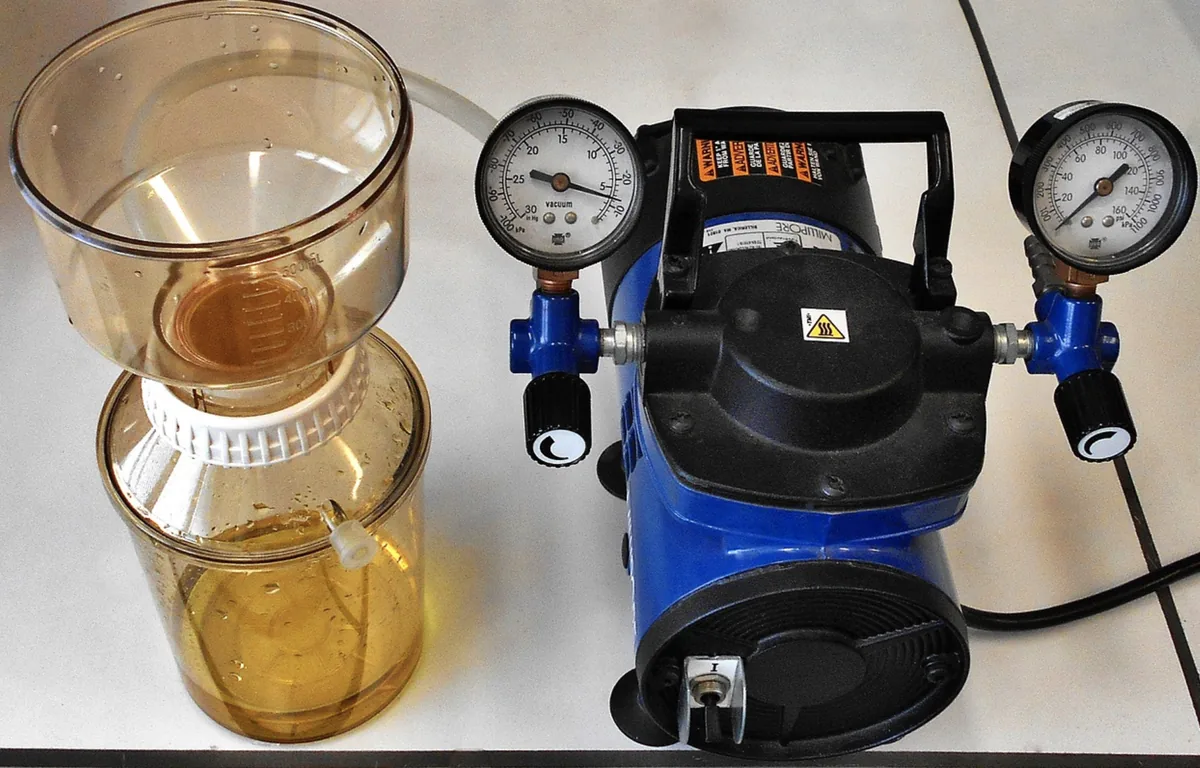
Evacuation is the step that separates a system that runs for twenty years from one that comes back with a restricted metering device. A vacuum pump pulls the pressure inside a refrigerant circuit far enough below atmospheric that trapped moisture boils off and non-condensables are drawn out. Skip it, rush it, or do it with the wrong pump and you leave water inside a sealed system that has no way to get rid of it.
What an HVAC vacuum pump does
Moisture is the enemy. Water inside a refrigerant circuit reacts with refrigerant and oil to form acids that attack windings and bearings, and it can freeze at the metering device and block flow altogether. Air is nearly as unwelcome: nitrogen and oxygen do not condense, so they collect in the condenser, raise head pressure and cut capacity.
A vacuum pump solves both at once. Lowering the pressure drops water's boiling point until it evaporates at ambient temperature, and the pump then carries that vapour out along with any air. At about 500 microns, water boils at roughly room temperature — which is why 500 microns is the number the trade works to.
What else these pumps get used for
Beyond servicing household and automotive air conditioning, the same pumps recharge refrigerators and freezers, degas epoxy and wine, vacuum-seal jars for food preservation, thermoform plastic sheet, and drive vacuum systems in dairy and laboratory work. It is a genuinely general-purpose tool, which is part of why the market is so crowded.
How to choose one
CFM (displacement)
CFM governs how quickly the pump moves the bulk of the gas, not how deep a vacuum it reaches. For residential split systems a 4–6 CFM pump is the sweet spot. Going bigger mainly helps on long line sets and larger commercial charges; going much smaller means long evacuations on anything but a small sealed appliance. Note that the restriction in your hoses and manifold will limit throughput more than the pump's rating does.
Single-stage vs two-stage
A single-stage pump will typically reach the mid-hundreds of microns — adequate but with little headroom. A two-stage pump exhausts the first stage into a second, reaching a far deeper ultimate vacuum, usually well under 100 microns. If you intend to hit 500 microns reliably on real jobs, buy two-stage.
The gauge matters more than the pump
This is the part most buyers get wrong. The needle on a manifold gauge cannot resolve the range you care about — it will sit on “30 inches” long before the system is actually dry. You need a digital micron gauge, connected away from the pump itself, ideally at the far end of the system. Without one you are not evacuating, you are guessing.
Hoses and connections
Large-diameter, short evacuation hoses make a dramatic difference. A quarter-inch charging hose is a straw; a 3/8 inch or 1/2 inch evacuation hose with a core-removal tool at the service valve can cut evacuation time by more than half. Pulling through the manifold with the cores still in place is the most common reason an otherwise good pump seems slow.
Oil and upkeep
Vacuum pump oil absorbs the moisture the pump removes, and contaminated oil raises the achievable vacuum. Change it often — realistically before every serious evacuation, and always while the pump is warm. A gas ballast valve lets the pump purge moisture out of the oil during a long pull. Check the sight glass; milky oil means change it now.
How to actually perform an evacuation
- Pressure test and repair leaks first. A vacuum pump is not a leak-repair tool, and you cannot pull a vacuum on a leaking system.
- Remove the valve cores and connect large-diameter hoses to both the high and low side.
- Fit the micron gauge remote from the pump.
- Run the pump until the gauge reads below 500 microns.
- Valve off the pump and watch the gauge — this is the decay test. A reading that holds is a dry, tight system. A rise that levels off around 1,500–2,000 microns means remaining moisture. A rise that keeps climbing without levelling means you still have a leak.
- Only then charge the system, by weight.
Price expectations
Usable pumps start around $55 for a basic single-stage unit and run to roughly $525 for a professional two-stage pump with a larger displacement and better seals. Budget separately for a micron gauge, proper evacuation hoses and a core-removal tool — the accessories are what turn a cheap pump into a reliable evacuation, and a good pump without them will still leave you guessing.